Seamless Floral Paris-Inspired Patterns
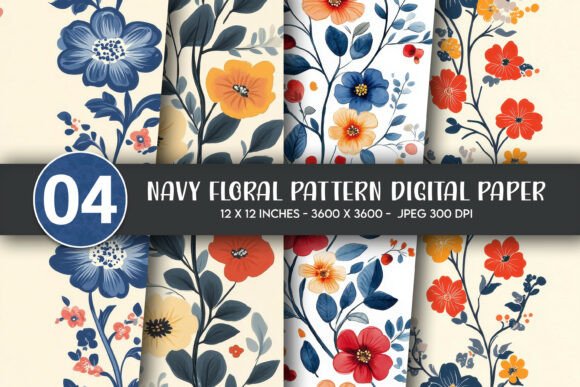
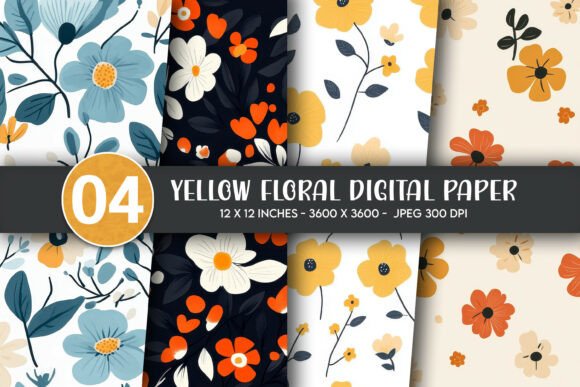
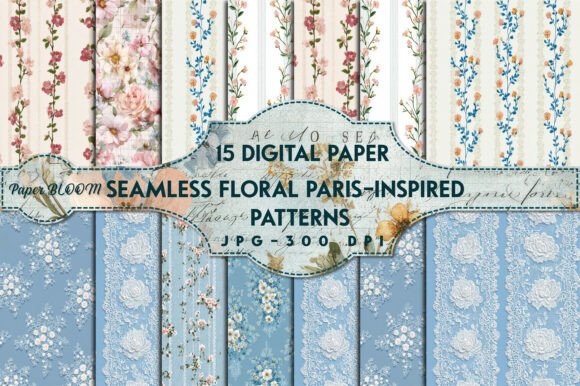
There’s a quiet confidence in Parisian design — not loud, not flashy, but deeply intentional. Think soft watercolor roses beside hand-drawn Eiffel silhouettes, faded lavender vines curling across cream paper, or delicate sprigs of jasmine layered with subtle parchment texture. Seamless Floral Paris-Inspired Patterns captures that spirit: romantic without being saccharine, vintage without feeling dated, floral without overwhelming. It’s not just decoration — it’s a design language you can build on.
Why Seamless Matters (Beyond Just “No Gaps”)
“Seamless” isn’t just a technical checkbox — it’s what makes these patterns *work* across real projects. Because each 12×12 inch tile repeats invisibly at 300 DPI, you’re not limited to static squares. You can scale backgrounds infinitely for large-format prints like wall art or fabric yardage. You can crop tightly for sticker sheets without revealing edges. You can layer them under text in Canva or Illustrator and know the rhythm stays consistent — no awkward breaks where motifs cut off mid-bloom.
This reliability saves time. No more manually stitching tiles or adjusting opacity to hide seams. No more second-guessing how a pattern will behave when stretched across a 24-inch planner cover or repeated across a Shopify product page background. That consistency builds trust — in your process, your output, and your brand’s visual voice.
Creative Uses That Go Beyond “Pretty Backgrounds”
These patterns shine when treated as active design elements — not passive fill. Here’s how different creators use them intentionally:
- Small business owners apply one pattern as a subtle watermark behind invoices or email footers — instantly elevating professionalism while reinforcing a refined, European-inspired aesthetic (ideal for boutiques, bridal services, or artisanal skincare brands).
- Educators and curriculum designers use lighter-toned patterns as gentle page backgrounds in printable worksheets or digital lesson slides — reducing visual fatigue without sacrificing elegance.
- Bloggers and content creators layer a low-opacity floral tile over hero images in Pinterest graphics or Instagram story templates, adding depth and cohesion to their feed without competing with text or photos.
- Freelance stationery designers combine two patterns — say, a soft rose motif with a faint herringbone line — to create custom foil-stamped invitation suites where texture and motif support hierarchy, not distract from it.
The key is restraint. Let one pattern anchor a project — then complement it with clean typography, ample white space, or a single bold accent color like deep navy or warm terracotta. Overlayering multiple florals rarely strengthens impact; thoughtful pairing does.
Practical Tips for Consistent, Audience-Friendly Results
High resolution means flexibility — but only if used intentionally. A 3600×3600 px file gives you room to scale down for web use (72 DPI) or print large (300 DPI), but avoid upscaling beyond native size. For social media posts, export at 1080×1350 px (Instagram carousels) or 1200×630 px (Facebook links) — using the pattern as a base layer, not the sole visual focus.
For print projects like greeting cards or wrapping paper, always embed the pattern into your layout file *before* exporting to PDF/X-1a. This prevents color shifts or missing assets in commercial printing. And if you’re designing for accessibility — especially in educational or public-facing materials — test contrast: pair softer patterns with dark, highly legible type (e.g., Montserrat Bold at 16pt+), not light gray on ecru.
Consistency also comes from curation. With 15 unique patterns, don’t default to the first three that catch your eye. Sort them by dominant hue (blush, sage, dove gray), motif density (sparse vine vs. all-over bloom), or texture level (matte paper feel vs. slight watercolor bleed). Then match that to your project’s purpose: a wedding invitation suite might lean into softer tones and open composition; a boutique’s packaging might choose bolder contrast and tighter repeat for shelf impact.
Adapting for Different Platforms & Goals
Digital and print demand different handling — but the same principles apply. In Procreate or Photoshop, use patterns as clipping masks over shape layers to create custom icons or social media banners. In Canva, upload as an image background, then lock the aspect ratio before resizing — this preserves tiling integrity better than free-form stretching.
For physical products, consider scale context: a pattern that reads beautifully on a 5×7 inch card may feel cramped on a 12×12 scrapbook page unless repeated with intentional spacing. Test prints at actual size — even a quick home-printed 4×6 swatch reveals how motifs interact with real-world light and paper stock.
And for branding? Don’t treat these as one-off decor. Use one pattern as your primary brand texture — then derive secondary elements from it: pull the dominant rose hue for your CTA button color, echo the vine curve in your logo’s custom underline, or translate the soft grain into a subtle noise layer in your website’s CSS background. That kind of rooted cohesion is what makes a visual identity feel considered, not assembled.
What Makes This Collection Stand Apart
It’s not just about Paris — it’s about how Paris is interpreted. These aren’t clichéd berets and baguettes. They’re quiet nods: a trailing wisteria reminiscent of Montmartre courtyards, a muted ochre tone pulled from old Seine-side stucco, a delicate stem weight that mirrors ink sketches in a Left Bank notebook. The palette avoids neon saturation and trend-driven pastels — instead favoring tones that age well, print cleanly, and sit comfortably beside photography or illustration.
That intentionality means these patterns serve long-term creative needs. They won’t feel “of 2024” next year. They support storytelling — whether you’re designing a memoir journal cover, a luxury candle label, or a workshop workbook for mindful creativity. They’re tools, not trends.
If you’ve ever hesitated to use floral patterns for fear of looking dated or overly feminine, start here. Let the seamlessness handle the mechanics. Let the Parisian sensibility guide the mood. Then focus on what matters most: the idea you’re sharing, the person you’re serving, and the clarity of your message — wrapped in quiet, enduring beauty.